
Introduction
How to Keep an RV Water Filter From Freezing in Winter The forecast says 24°F tonight, and your water filter is bolted to the outside spigot with nothing around it. This guide shows you which method fits which temperature, and you can protect it in about 20 minutes with materials you may already have.
Table of Contents
Quick Answer: To keep an RV water filter from freezing, insulate the filter housing and hose, add a thermostat-controlled heated hose, and move the filter inside the RV when nights drop below 32°F (0°C). For freezes lasting several days, remove the filter, drain it, and store the cartridge somewhere frost-free.
What You Need to Know
- Water freezes at 32°F (0°C), and a filter housing can crack before you see any ice.
- A heated hose protects the hose, but the filter at the spigot end often stays exposed.
- Insulation is enough for short dips below freezing; extended cold means removal.
- A filter that froze can look fine after thawing and still be damaged, so inspect it before you drink from it.
- Store cartridges indoors, ensuring they are sealed and frost-free, and sanitize the system before restarting it.
How Do You Keep an RV Water Filter From Freezing?
Insulate the housing, protect the hose, and relocate the filter inside the rig once overnight lows fall below 32°F. Follow these steps in order, stopping at the level of protection your forecast demands.
- Act when the forecast is within 5°F of freezing (37°F or below). Water in a small housing loses heat quickly once the air drops under 32°F.
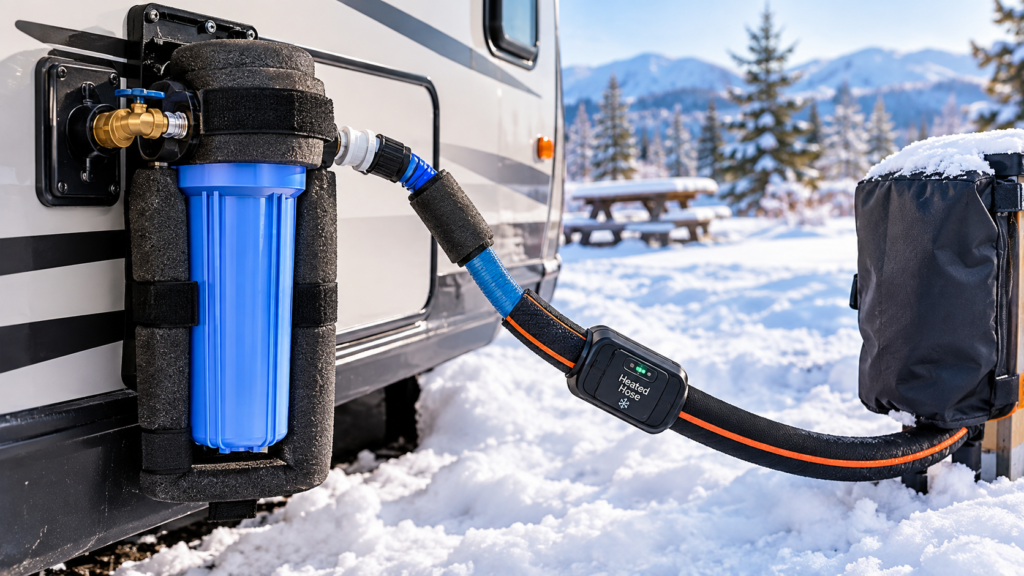
- Wrap the filter housing in foam insulation. Use a foam pipe sleeve or an insulated filter cover, at least 1/2 inch thick, and tape every seam. Cover the spigot connection and the hose fitting too.
- Switch to a heated hose. Choose a thermostat-controlled model labeled safe for drinking water and verify its rated minimum temperature on the packaging. Plug it in before dusk.
- Move the filter inside the RV. Install it on the hose end that reaches the water inlet, inside a heated storage bay or the cabin. This is the most reliable option because it removes the exposure entirely.
- Cover the spigot area. Add an insulated spigot cover or a skirt to block wind, since wind chill speeds up heat loss from exposed fittings.
- Check at bedtime and again at first light. Confirm the heated hose is warm and the water still flows before you leave for the day.y.
Can an RV Water Filter Freeze? What Happens When It Does
Yes, an RV water filter can freeze, and the danger is cracked plastic rather than a solid block of ice. Water expands as it turns to ice, according to the USGS Water Science School [verify URL], and a rigid housing has nowhere to let that pressure go.
A filter is a sealed container full of water, which makes it one of the weakest points in your water line. Manufacturers commonly warn that freezing can crack the housing, split the cartridge media, and loosen the fittings.
Here is the counterintuitive part: a filter can freeze, thaw, and look perfectly normal. Hairline cracks or a damaged cartridge may only show up as a slow drip or as water that no longer filters properly.
What are the signs of freeze damage?
Look for these after any freeze:
- Visible cracks or white stress marks on the housing
- Drips or a wet compartment around the filter
- A sudden drop in water pressure
- A cartridge that feels softer, lighter, or swollen
- Water that tastes or smells different than before
Insulate, Heat, or Remove? A Decision Guide
Match your protection to the overnight low. Use the chart below, and treat the bands as general guidance rather than a manufacturer specification.
RV Water Filter Freeze-Risk Chart
| Overnight low | Risk level | What to do |
|---|---|---|
| Above 40°F (4°C) | Low | No action needed |
| 32–40°F (0–4°C) | Watch | Insulate the housing and hose; recheck the forecast |
| Below 32°F (0°C) for a few hours | High | Insulate and use a heated hose, or move the filter inside |
| Sustained below about 20°F (−7°C) | Severe | Remove and drain the filter; store the cartridge indoors |
Save or screenshot this Freeze-Risk Chart. It covers every overnight forecast you will meet this winter.
Troubleshooting decision tree: no water flow
- Is the hose frozen? If yes, thaw it slowly and continue.
- Is the filter housing coated in ice? If yes, bring it inside and let it thaw at room temperature.
- Any cracks or leaks after thawing? If yes, replace the housing or cartridge before reconnecting.
- No damage and normal flow? Reinstall and flush the line for a few minutes.
Want this as a printable page for your rig? Join the Filter Expert Hub newsletter, and we’ll send the Freeze-Protection Checklist so it’s in your glovebox before the next cold snap.
How Do You Protect the Rest of the Water Line?
A frozen hose or spigot stops your water just as completely as a frozen filter. Protect the whole path from the campground spigot to your inlet.
- Heated hose: A thermostat-controlled hose warms only when needed. Follow the manufacturer’s directions and never coil it while powered.
- Heat tape on fittings: Use only tape rated for the connection material, and follow the instructions exactly. Improper use is a fire hazard.
- Foam insulation: Cover any exposed connectors, elbows, and the spigot.
- Short hose runs: Less hose above ground means less surface area to freeze.
To keep the rest of your supply flowing, the RV Travel freeze warning guide is a useful companion read on whole-system protection.
A heated hose does not automatically protect your filter. The filter sits at the connection point, so wrap it as well or move it inside.
What Should You Do If Your RV Water Filter Already Froze?
Thaw it slowly at room temperature, inspect every part, and replace anything cracked. Never use an open flame, a torch, or a high-heat gun, because they can warp the plastic and hide damage.
- Shut off the water and disconnect the filter. This prevents a leak when the ice melts.
- Bring the filter into a room above 50°F. Give it 2–4 hours to thaw fully.
- Inspect the housing, O-rings, and fittings. Look for cracks, warping, and flattened seals.
- Check the cartridge. If it is cracked, crumbling, or unusually soft, discard it.
- Reinstall and flush. Run water through for several minutes and watch for drips.
When the cartridge is damaged, replace it rather than trust it. Our guide on how often to replace an RV water filter [confirm URL] covers timing, and a fresh certified cartridge is the tool for this job. [AFFILIATE LINK: replacement RV water filter cartridge]
When to call a professional: If water is leaking inside the rig, or fittings that connect to the RV’s plumbing look cracked, ask an RV technician to check the system.
For confidence in a replacement, look for certification to NSF/ANSI 42 and 53 [verify URL], the standards that cover taste, odor, and contaminant reduction.
What Are the Most Common Freeze-Prevention Mistakes?
The most common mistake reported in owner forums is assuming the heated hose covers everything. Here are the others.
- Leaving the filter exposed at the spigot while the hose is warm
- Pushing RV antifreeze through the cartridge, which wastes the filter and leaves antifreeze in the media
- Thawing with heat guns or flame, which weakens the housing
- Reusing a filter that froze without inspecting it
- Storing wet cartridges in a cold garage where they freeze again
- Skipping the morning check and discovering damage after the water is already off
How Do You Store RV Water Filters When Not in Use?
Remove the cartridge, drain it, seal it, and keep it above freezing. A cartridge that is stored wet in the cold is one of the most common ways filters freeze.
- Shut off the water and remove the housing.
- Drain the housing and let the cartridge air-dry briefly. Follow the manufacturer’s advice on drying time.
- Seal the cartridge in a clean zip-top bag. This keeps out dust and moisture.
- Store it indoors at a temperature above 32°F, away from heaters.
- Sanitize the system at restart. Thee CDC guidance on RV and camper water systems [verify URL] recommends sanitizing after storage.
- Install a fresh or verified cartridge. Our walkthrough on how to install an RV water filter shows the correct orientation and flush.
FAQ
How do you keep an RV water supply from freezing?
Protect every exposed point. Use a thermostat-controlled heated hose, wrap the spigot connection and filter with foam insulation, and keep the hose run short. When nights stay below 32°F for several days, disconnect and drain the outdoor components and rely on your onboard tank if the rig is winter-rated.
What happens if my water filter freezes?
Ice expands inside the sealed housing and can crack the plastic, split the cartridge, or damage the seals. The filter may look normal after thawing. Inspect the housing for cracks, check for drips, and replace the cartridge if its structure looks damaged, since a compromised cartridge may no longer filter reliably.
How do you prevent water from freezing in winter?
Keep water moving, insulated, or heated. Insulate exposed plumbing, add heat sources rated for potable water, and shorten the exposed run. For extended freezes, drain the outdoor components entirely. Insulation slows heat loss but does not add heat, so it works best for short dips below freezing.
How do you store RV water filters when not in use?
Remove the cartridge, drain the housing, seal the cartridge in a clean bag, and keep it indoors above 32°F. Store it away from direct heat. When you reinstall it, follow the manufacturer’s instructions and sanitize the RV water system before drinking.
Can you run RV antifreeze through a water filter?
Generally no. Manufacturers commonly recommend removing the cartridge before winterizing with RV antifreeze, because the media can absorb it. Bypass or take out the filter, run non-toxic RV antifreeze through the lines, and install a fresh cartridge in spring. Check your filter’s manual for specifics.
Is the water safe to drink after a freeze?
Only after you check the filter and system. Confirm there are no cracks or leaks, flush the lines, and replace any damaged cartridge. If you suspect contamination, sanitize the system first. For more, read can you drink water from your RV.
Does a heated hose protect the filter too?
Not on its own. A heated hose warms the hose, but the filter housing at the connection point often stays exposed to cold air. Wrap the housing in insulation or move the filter inside the RV so the protection covers the whole line..
What to Do Next
- Check whether your cartridge needs replacing: see how often to replace an RV water filter.
- Reinstall correctly after storage or damage: follow how to install an RV water filter.
- Confirm your water is safe: read can you drink water from your RV.